
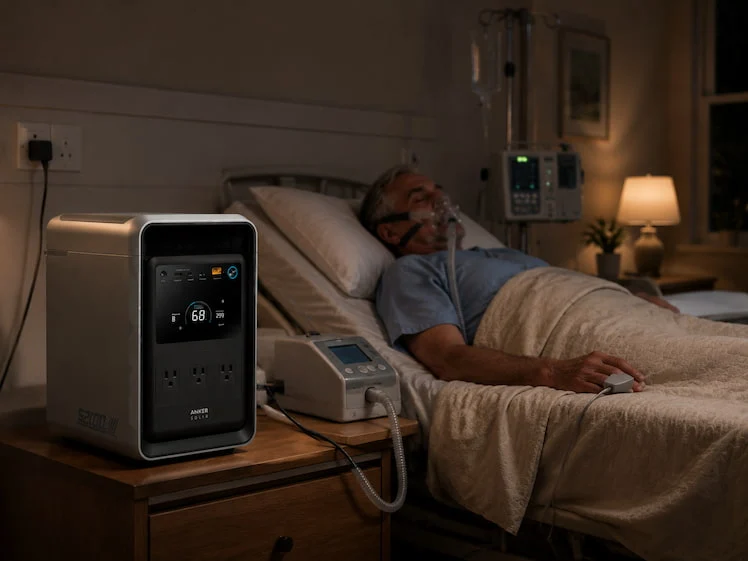
When a family member depends on medical equipment at home, a power cut is more than an inconvenience. It can affect their comfort, their mobility and, in some cases, their safety. A little planning in advance means you will know exactly what to do when the lights go out.
Know Which Equipment Depends on Power
Make a list of every device your loved one uses that needs electricity, and note how important each one is.
- Oxygen concentrators: The most critical. Talk to the doctor about a backup plan before you need one.
- Electric hospital beds: Ask the supplier how the bed can be adjusted or lowered when there is no power.
- Electric wheelchairs: Rely on charged batteries.
- Monitors and meters: Many run on batteries, so keep spares.
Plan for Oxygen Therapy
If the patient uses an oxygen concentrator, do not wait for an outage to find out what happens next. Ask the doctor what the patient should do during a power cut, and whether a backup oxygen supply or backup power source is needed. Keep emergency numbers where everyone can see them.
Keep Batteries Charged
- Charge electric wheelchair batteries whenever power is available, rather than waiting until they run low.
- Keep spare batteries for blood pressure monitors, glucose meters and torches.
- Keep a charged power bank for phones so you can always call for help.
Protect Equipment from Power Surges
Unstable power and sudden surges when electricity returns can damage electronics. Use surge protection suitable for the device, and ask your supplier what is recommended for each piece of equipment. For sensitive equipment, consider switching off and unplugging it during an outage, then reconnecting only once the supply is stable.
If You Use a Generator or Inverter
- Have a qualified electrician install and check any backup power system.
- Never run a generator indoors or in an enclosed space. The exhaust contains carbon monoxide, which is dangerous.
- Check that the backup source can handle what you plan to connect, and ask your supplier about each device's power needs.
- Store fuel safely, away from the patient and from open flames, especially when oxygen is in use.
Make an Emergency Plan
- Write down the doctor's number, the supplier's number and local emergency services.
- Agree who does what during an outage.
- Keep a torch and spare batteries within reach of the patient's bed.
- Know the signs that mean you must get urgent medical help, such as worsening breathlessness or confusion.
Ask DMT Mate for Advice
DMT Mate Technologies supplies hospital beds, oxygen concentrators and electric wheelchairs, and our team can answer your questions about caring for them. If your equipment develops a fault, we also repair wheelchairs, hospital beds and other mobility equipment.
Message us on WhatsApp: +233 55 262 2373. We reply within 15 minutes during working hours. You can also visit us at the 3rd Floor, One Airport Square, Accra.
This article is for general information only and is not a substitute for professional medical advice. Ask your doctor and equipment supplier for guidance specific to the patient and the device.