
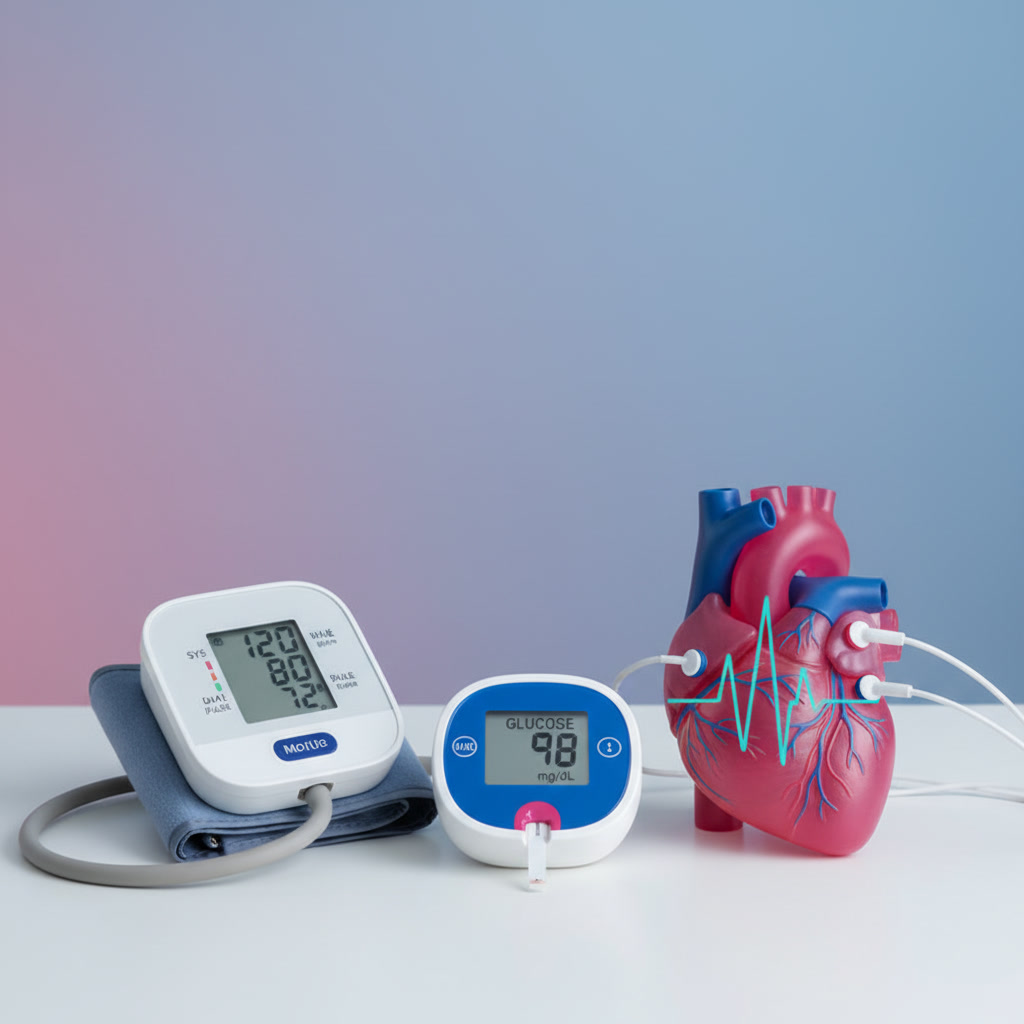
High blood pressure and diabetes are common, and both can go unnoticed for a long time. Checking at home, between clinic visits, gives you and your doctor a clearer picture of what is really happening. It also helps you notice changes early, before they become serious.
Why Monitor at Home?
- Spot changes early: You can notice a rise or drop before it causes symptoms.
- Give your doctor better information: A record of readings over days and weeks is more useful than a single clinic reading.
- See what works: Readings show how food, activity, stress and medication affect your health.
- Feel more in control: Regular checks help people take an active role in their own care.
Using a Blood Pressure Monitor
An upper-arm digital monitor is easy to use at home. To get an accurate reading:
- Sit quietly for about five minutes before measuring, with your back supported and feet flat on the floor.
- Rest your arm on a table so the cuff is at heart level.
- Wrap the cuff snugly around the bare upper arm, following the monitor's instructions.
- Stay still and do not talk during the measurement.
- Take two readings about a minute apart, and write both down.
Avoid caffeine, smoking and exercise for at least 30 minutes beforehand, and try to measure at the same times each day. Make sure the cuff size fits your arm, since a cuff that is too small or too large gives inaccurate readings.
Using a Blood Glucose Monitor
A glucometer measures the sugar level in a small drop of blood. For reliable results:
- Wash your hands with soap and water, and dry them well.
- Insert a new test strip into the meter, checking the strips have not expired.
- Prick the side of a fingertip with a fresh lancet, and change fingers each time.
- Touch the drop of blood to the strip and wait for the result.
- Record the reading, with the time and whether it was before or after a meal.
Keep test strips sealed in their container, away from heat and moisture. Never share lancets or meters, and dispose of used lancets safely.
Keep a Simple Record
Write down each reading with the date and time, in a notebook or on your phone. Take the record to every appointment. Patterns are far more useful to your doctor than isolated numbers.
What to Do with the Readings
- Ask for your targets: Normal and target ranges differ from person to person, so ask your doctor what your numbers should be.
- Do not change medication on your own: Always speak to your doctor before changing doses or stopping treatment.
- Seek urgent care when needed: If a reading is much higher or lower than usual, or you feel unwell with chest pain, severe headache, confusion, weakness, difficulty speaking or fainting, get medical help immediately.
Choosing the Right Devices
Look for monitors that are easy to read and operate, especially for older users, and make sure replacement strips and accessories are easy to find. Buying from a supplier of genuine equipment helps you trust your readings.
Get Monitors and Test Strips from DMT Mate
DMT Mate Technologies supplies digital blood pressure monitors for routine home use, as well as glucometers, test strips and accessories for diabetes monitoring. Tell us what you need and we will help you choose the right devices.
Request a quote on WhatsApp: +233 55 262 2373. We reply within 15 minutes during working hours. You can also visit us at the 3rd Floor, One Airport Square, Accra.
This article is for general information only and is not a substitute for professional medical advice. Always follow your doctor's guidance on how often to check and what your readings mean.